
How Much Does an Industrial Crate Washer Cost? Here's What Determines the Price!
The price of an industrial crate washer can vary significantly: from tens of thousands of euros for a compact entry-level model to a considerably higher investment for a fully automated line with high capacity. There’s no single answer to ‘how much does a crate washer cost.’
Still, it’s worth explaining why prices differ so much. In this article, we outline the key factors that shape the investment, so you get a realistic picture of what you’re paying for and what to look out for before requesting a quote.
Why crate washer prices vary so much
A crate washer isn’t a standard, off-the-shelf product. The right machine depends on your production volume, the type of contamination, the available space, and the hygiene requirements specific to your sector. Two companies with ‘the same request’ can therefore end up with very different investments.
Before comparing prices, it’s important to understand which components of a system actually drive the cost.
The main factors that determine the price
Capacity
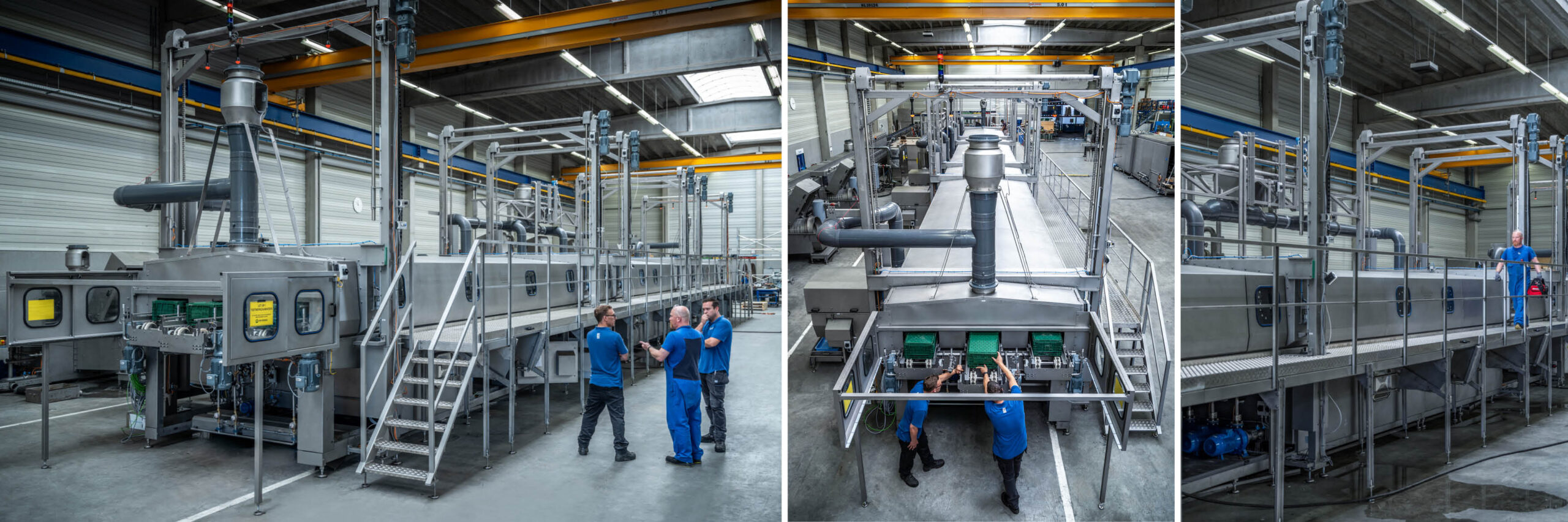
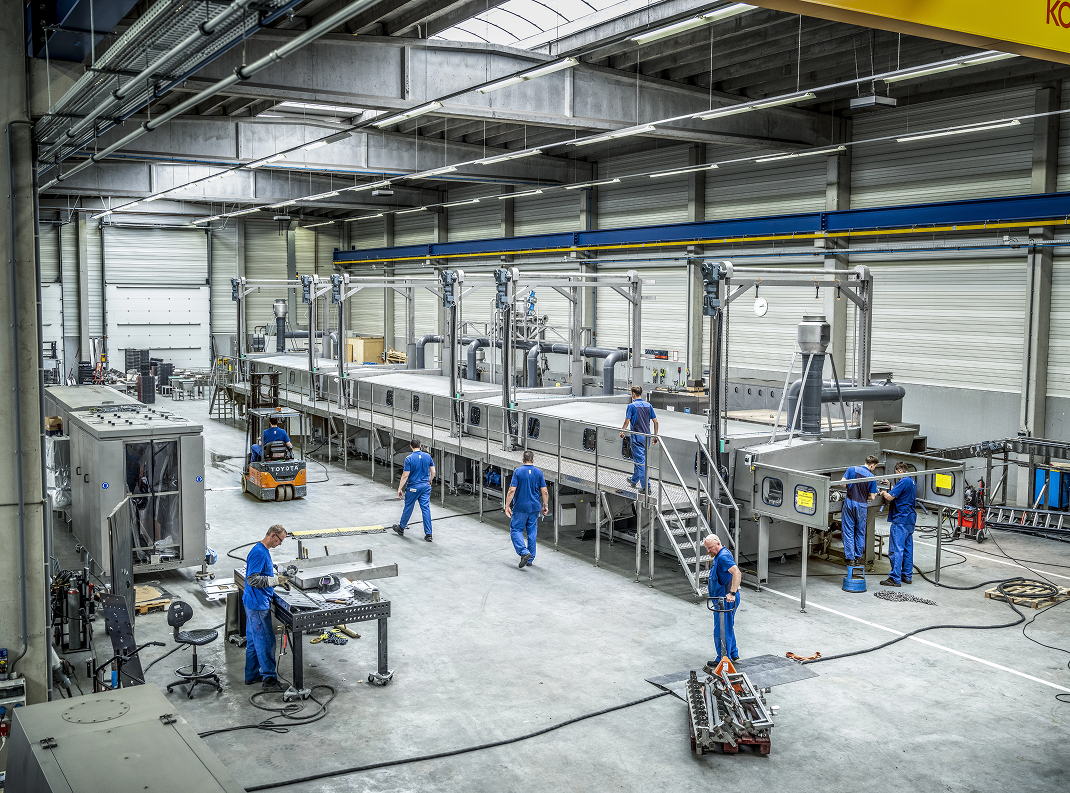
How many crates per hour need to be washed? A machine that cleans 300 crates per hour is fundamentally different from a line built for close to 6,000 crates per hour. Capacity is usually the biggest cost driver.
Level of automation
A semi-automatic crate washer with manual loading is cheaper than a fully automated line with integrated infeed and outfeed. More automation means a higher investment, but also lower labour costs and a higher, more consistent throughput.
Material choice and build quality
Fully stainless-steel constructions, heavier-duty pumps, and more durable components increase the purchase price, but also extend the machine’s lifespan and reduce maintenance costs over time.
Drying options
Do you want your crates to come out of the line dry and ready for reuse? An integrated drying tunnel or air-blow section adds functionality and cost.
Material handling and transport
Stackers, destackers, and conveyor systems that seamlessly connect to your existing line make the overall process more efficient but add to the total investment.
Custom-built versus standard solutions
A standard machine is generally more cost-effective than a solution fully tailored to specific crate sizes, contamination levels, or space constraints. Custom-built solutions pay off especially when standard options don’t fit your process.
New versus used: what to consider
Alongside new machines, there’s an active market for used crate washers. This can lower the entry threshold, but before choosing this route, it’s worth mapping out the following:
- Is warranty or service support still available for the machine?
- Are spare parts still available?
- Does the capacity match your current and future production volume?
- Was the machine built to meet the hygiene requirements in your sector?
A lower purchase price can turn out to be more expensive in the long run if parts are no longer available or the machine no longer meets current hygiene standards.
Buy, rent, or lease?
Not every organisation wants or is able to make a large investment all at once. Besides purchasing, there are alternatives:
- Buying: full ownership, suited to stable or growing production volumes.
- Renting or leasing: lower entry costs and more flexibility, for example during seasonal peaks or temporary capacity needs.
For organisations looking for flexibility without compromising on quality, we offer Clean Lease as a tailored alternative alongside standard purchase options.
Look beyond the purchase price: total cost of ownership
The purchase price is only one part of the total cost. Just as important are:
- Water and energy consumption per wash cycle
- Maintenance costs and the availability of spare parts
- Downtime in case of breakdowns
- The lifespan of the machine
- Labour costs, depending on the chosen level of automation
A machine with a higher purchase price but lower water consumption and a longer lifespan can prove more cost-effective over time than a cheaper alternative that needs to be replaced or serviced more often.
The role of Numafa
At Numafa, we believe a sound investment decision starts with insight into your production process, your volumes, and your future plans. Our technical advisors think along with you from the very first contact, to determine which capacity, automation level, and configuration truly fit your situation, rather than offering a standard solution that doesn’t.
Whether it’s a compact crate washer for a growing bakery or a fully automated line for high-volume production: we help you make the investment that pays off the most in the long run.
Back to overviewLooking for a committed partner?
We understand that every project has different needs and requirements. Get in touch with us. We’ll be happy to help you find the right solution for your situation.

