
Bakery hygiene and HACCP: gain control over your cleaning process
Hygiene is a continuous challenge in industrial bakeries. You are dealing with high volumes, tight production schedules and reusable product carriers that move throughout your entire process. At the same time, requirements from HACCP, IFS and BRC are becoming increasingly strict.
Most industrial bakeries have their processes in place. Yet, we often see audits fail on one key aspect: proof. Cleaning is performed, but can you demonstrate that it is done consistently and meets the required standards every time?
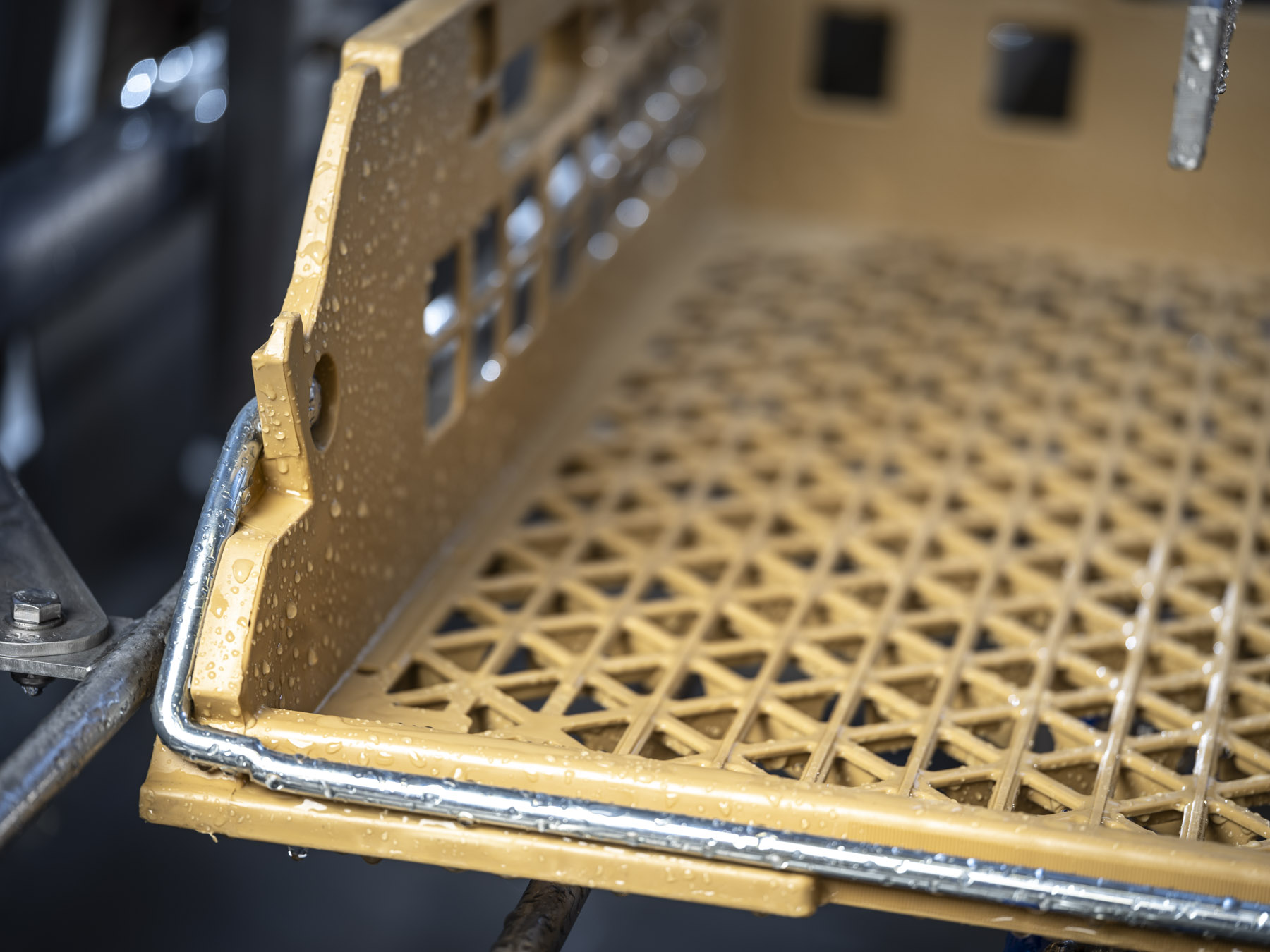
This is where issues often arise, especially with crates, trays and baking molds.
Why bakeries fail hygiene audits
HACCP is defined, but not fully controlled
In most cases, the foundation is there. Procedures are documented and responsibilities are clear. However, on the production floor, execution often varies.
Under time pressure or due to labor shortages, the focus shifts to output. Cleaning becomes something that ‘gets done along the way’ instead of a controlled and critical process.
Cleaning is often the weakest link
In many bakeries, parts of the cleaning process are already automated. At the same time, manual steps still remain, such as pre-cleaning, handling specific product carriers, or post-cleaning. This is exactly where inconsistencies occur, directly affecting the final result.
From doing to proving
Auditors are increasingly focused on proof rather than intent. Key questions include:
- Is your cleaning process consistent?
- Can you demonstrate that results meet required standards?
- Do you have control over deviations?
If these questions cannot be clearly answered, audit findings are likely.
The role of product carriers in food safety
Crates, trays and molds move through your entire process
Reusable product carriers form a critical link in your production flow. They come into contact with raw materials, semi-finished products and finished goods. This makes them a potential source of contamination if cleaning is not fully controlled.
This is where inconsistencies often occur
Contamination is often complex and varies:
- dough residues,
- fats and
- sugars or chocolate.
In practice, manual cleaning is still involved in many of these situations. As a result, the approach and outcome can vary from one cycle to another.
Direct impact on HACCP compliance
Because product carriers move across multiple process steps, they directly affect food safety. If cleaning is inconsistent, this will impact your HACCP compliance and audit performance.
Where inconsistencies in the cleaning process arise
Manual steps are difficult to standardize
In many bakeries, cleaning is partially automated but still includes manual actions. These steps depend on the operator, timing, and production pressure. In practice, this leads to variation in execution and results.
Process and reality do not always match
On paper, processes are clearly defined. In reality, factors such as speed, staffing and production priorities influence how cleaning is carried out. This creates a gap between intended and actual performance.
Limited visibility into results and deviations
It can be difficult to:
- measure cleaning consistency.
- identify where deviations occur.
- verify whether results meet standards every time.
This lack of visibility makes it challenging to achieve full HACCP compliance.
How to create a HACCP-compliant cleaning process
Consistency as a foundation
A reliable cleaning process delivers the same result every time, regardless of timing, volume or operator.
Insight into your process
To gain control, you need visibility into key parameters:
- temperature,
- time,
- mechanical action and
- use of chemicals.
This allows you to monitor and adjust where needed.
Cleaning as an integrated process
Cleaning does not stop at crate, tray or mold washing. Drying and handling are equally important. Only when these steps are aligned can you create a stable and controlled process.
What automated cleaning adds
Consistent and repeatable results
Automated systems standardize the process. Settings such as temperature, pressure, and cycle time are fixed and repeated every time. This ensures predictable and reliable outcomes.
Improved HACCP compliance and audit readiness
With controlled processes, you can document and demonstrate performance. This provides better insight into process parameters and supports audit requirements.
Reduced dependency on manual actions
Automation reduces variation caused by human intervention, resulting in a more stable and controlled process.
From separate steps to one integrated system
In practice, we see bakeries moving toward integrated solutions where washing, drying, and handling are combined into one continuous process. This creates better control, efficiency, and transparency.
When to rethink your cleaning process
Common signals
In conversations with bakeries, we often hear:
- recurring audit remarks.
- difficulty proving compliance.
- reliance on manual cleaning steps.
- increasing production volumes putting pressure on existing processes.
The next step
If you recognize these challenges, it may be time to review your cleaning process as a whole. We support bakeries in analyzing their current setup and identifying where improvements can be made. Not just from a technical perspective, but from a process and compliance standpoint.
Want to discuss your situation? Feel free to get in touch with one of our technical advisors.
Conclusion: hygiene starts with control
HACCP is not just about defining procedures, but about controlling and proving them.
In many bakeries, the biggest challenge lies in inconsistencies within the cleaning process, especially when it comes to reusable product carriers. By reducing variation and integrating cleaning steps into one controlled process, you gain better control over quality, compliance and audit performance. This is how cleaning shifts from being a risk to becoming a reliable foundation for your production process.
From manual cleaning to controlled processes
Fill in your details and receive the free whitepaper “Control of Hygiene and HACCP in the Industrial Bakery” directly by email.

