
Growing bakery? Here’s how to automate your cleaning process
In smaller bakeries, the cleaning process is often still manageable. Crates, trays and baking pans are cleaned in between and the process keeps up with production.
But as your bakery grows, things change. You start supplying multiple locations, supermarkets or food services and volumes increase. Production scales up and output rises.
Cleaning, however, doesn’t automatically scale with it. What used to be manageable now takes more time and capacity and starts affecting your planning. That’s when the question comes up: how do you organize your cleaning process so it’s as controlled as the rest of your production?
Where things start to break down
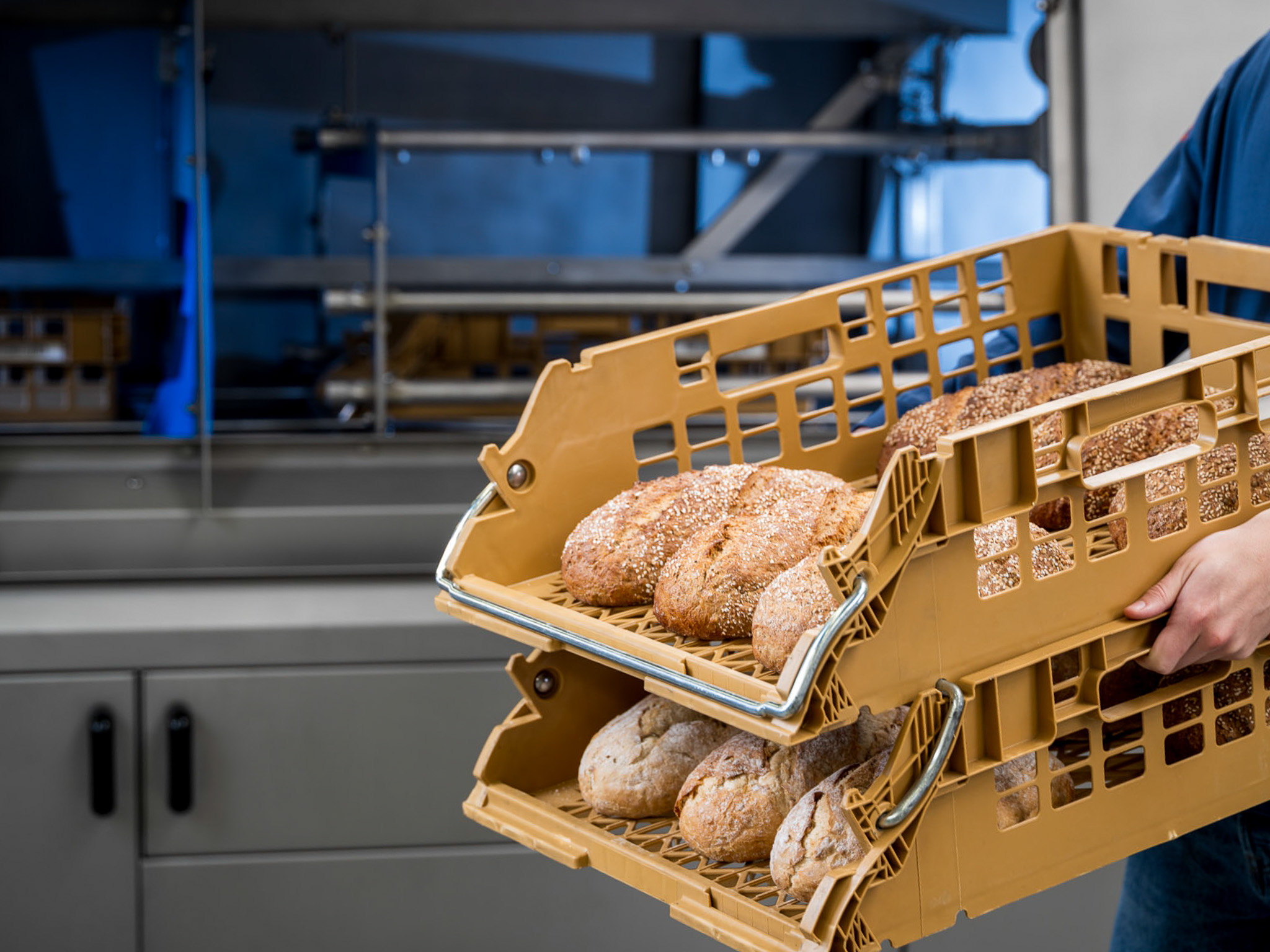
In practice, the issue is rarely just one thing. It’s a combination of factors. Cleaning product carriers is often still partly manual. Operators pre-rinse crates, clean baking trays or move items between different steps. This takes time, makes the process dependent on staff and reduces control over hygiene.
At the same time, pressure increases. Production must continue, volumes keep growing and staff is not always available. Under these conditions, cleaning quickly becomes something that “just happens on the side” instead of a structured process.
Another challenge is that cleaning is often split into separate steps. Washing, drying and handling are not fully aligned. This leads to extra actions, waiting times and a lack of overview.
At some point, the process simply can’t keep up anymore. Product carriers are not available on time, and cleaning starts to affect the rest of your operation.
The move towards bakery cleaning automation
At that stage, many industrial bakeries start looking at bakery cleaning automation. Not just to reduce manual work, but to gain more control.
Automation means organizing cleaning differently. Instead of separate manual steps, you move towards a continuous process where product carriers are automatically washed, dried and returned to production.
The first questions are usually practical:
- which industrial crate washer for a bakery is the right fit?
- how do you choose a tray washer for bakery production?
- which machine can replace manual cleaning?
These are valid questions. But the real value is not just in the machine itself, it’s in how the entire process is designed.
Want to discuss your situation? Feel free to get in touch with one of our technical advisors.
What if the process doesn’t run smoothly?
Automation doesn’t mean nothing will ever go wrong. In fact, the more you rely on your process, the more important it becomes that everything is properly set up.
In practice, you may run into questions like:
- What do you do if your crate washer stops working and your entire line has to wait?
- How do you reduce recurring downtime in your washing system?
- How do you remove baked-on dough from trays and pans without going back to manual cleaning?
- Or what if baking molds don’t come out clean enough and still require rework?
These are not isolated issues. They are signs that the process is not yet fully optimized.
From our experience, this often comes down to three things: the alignment between process steps, the suitability of the solution for specific product carriers and how well machines are integrated into the line.
That’s why at Numafa we don’t just focus on the machine, but on the complete system. By aligning washing, drying and handling, and by matching the solution to the type of contamination and product carriers, you prevent these issues from recurring.
From standalone machines to a complete washing system
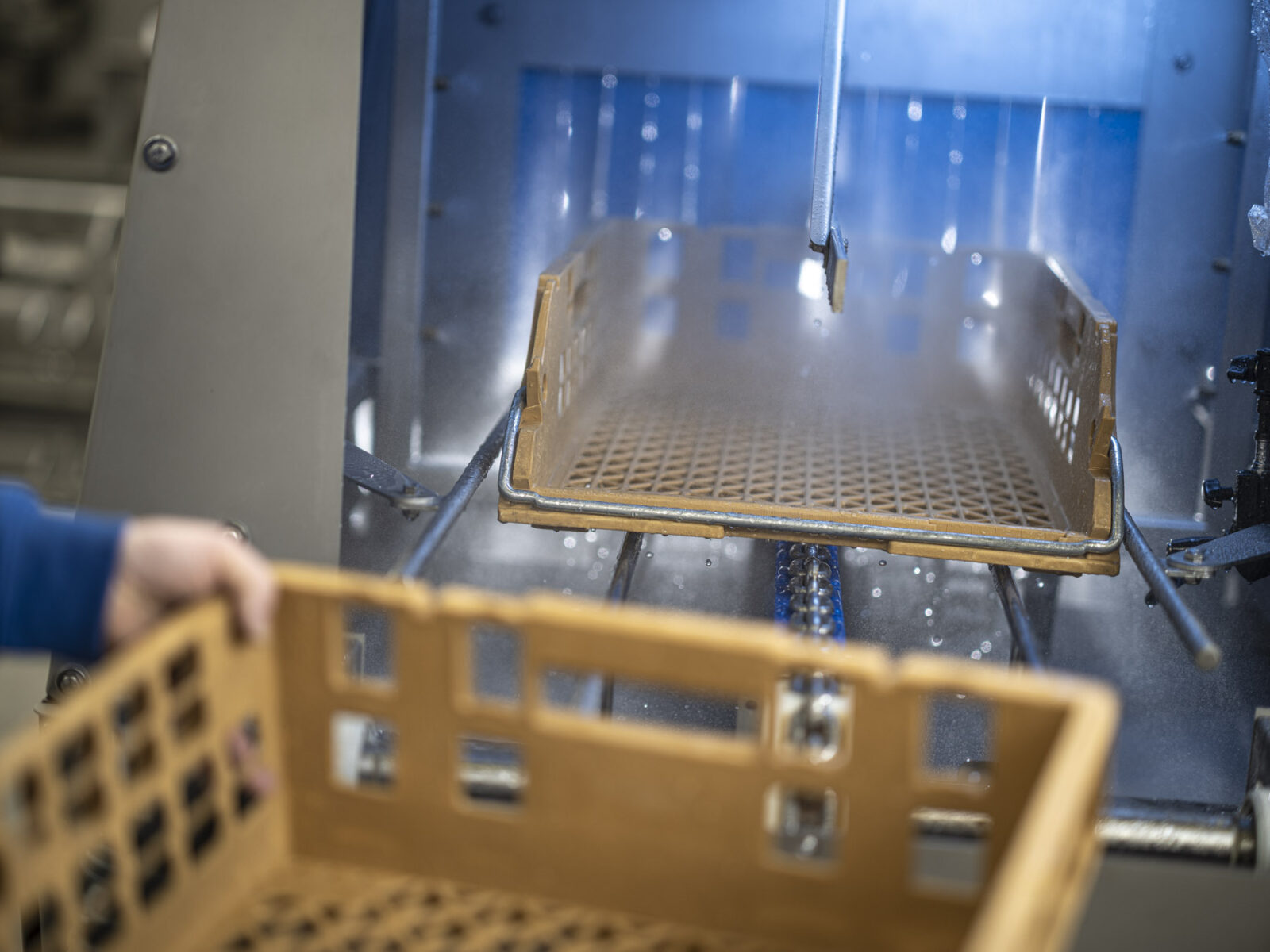
Many bakeries start with a single machine, such as an industrial crate washer. That’s a logical first step, but it doesn’t solve the full process. The difference lies in integration. When washing, drying and handling remain separate, manual work is still required. Product carriers need to be moved, dried or checked manually.
An integrated bakery washing system works differently. All steps are combined into one continuous line. Product carriers go in dirty and come out clean, dry and ready for use. This creates structure, efficiency and peace of mind in your process.
What bakery automation delivers in practice
When your cleaning process is properly set up, there’s an immediate impact. Manual handling is reduced, making you less dependent on staff. At the same time, your cleaning capacity becomes predictable. You know how many product carriers you can process and can align this with your production.
Quality also improves. Instead of variable results, you achieve a consistent level of cleaning every time.
In practice, this means:
- less time spent on manual cleaning.
- more capacity without additional staff.
- fewer disruptions in production.
- better control over your process.
It also brings more stability. When cleaning runs smoothly, the rest of your operation follows.
When is it time to automate?
The move towards a fully automated bakery process doesn’t happen overnight. It usually follows growth and increasing pressure on operations.
You may recognize the need when:
- cleaning takes up more and more time.
- it becomes difficult to find or retain staff.
- production grows faster than supporting processes.
- product carriers are not available when needed.
These are clear signals that it’s time to look beyond capacity and rethink your process as a whole.
Let’s find the right solution for your bakery
Want to explore how to improve your cleaning process and which solution fits your operation? We’re happy to think along with you about how to implement bakery cleaning automation in a way that truly works in your situation.
Back to overviewFrom manual cleaning to controlled processes
Fill in your details and receive the free whitepaper “Control of Hygiene and HACCP in the Industrial Bakery” directly by email.

